
Letter 132: Addressing the BUTs
You won’t see many conversions without this

You’re reading The Content Workshop — a weekly 2-min read sharing tips for building a product-led content engine by me, Masooma 🤓
Did a colleague or peer forward this email to you? Subscribe for free here.
Nestled among lush green trees, with a bubbling fountain and birdsong as my soundtrack, I work-cationed in Singapore last week ✨
Sounds like a don’t-wake-me-up dream, right? But also more like: the kind of experience that carves itself indelibly into your happy-memories drawer.
Another exciting bit of news: I even squeezed in some sun-up reading — with a steaming mug of herbal tea in hand 💃
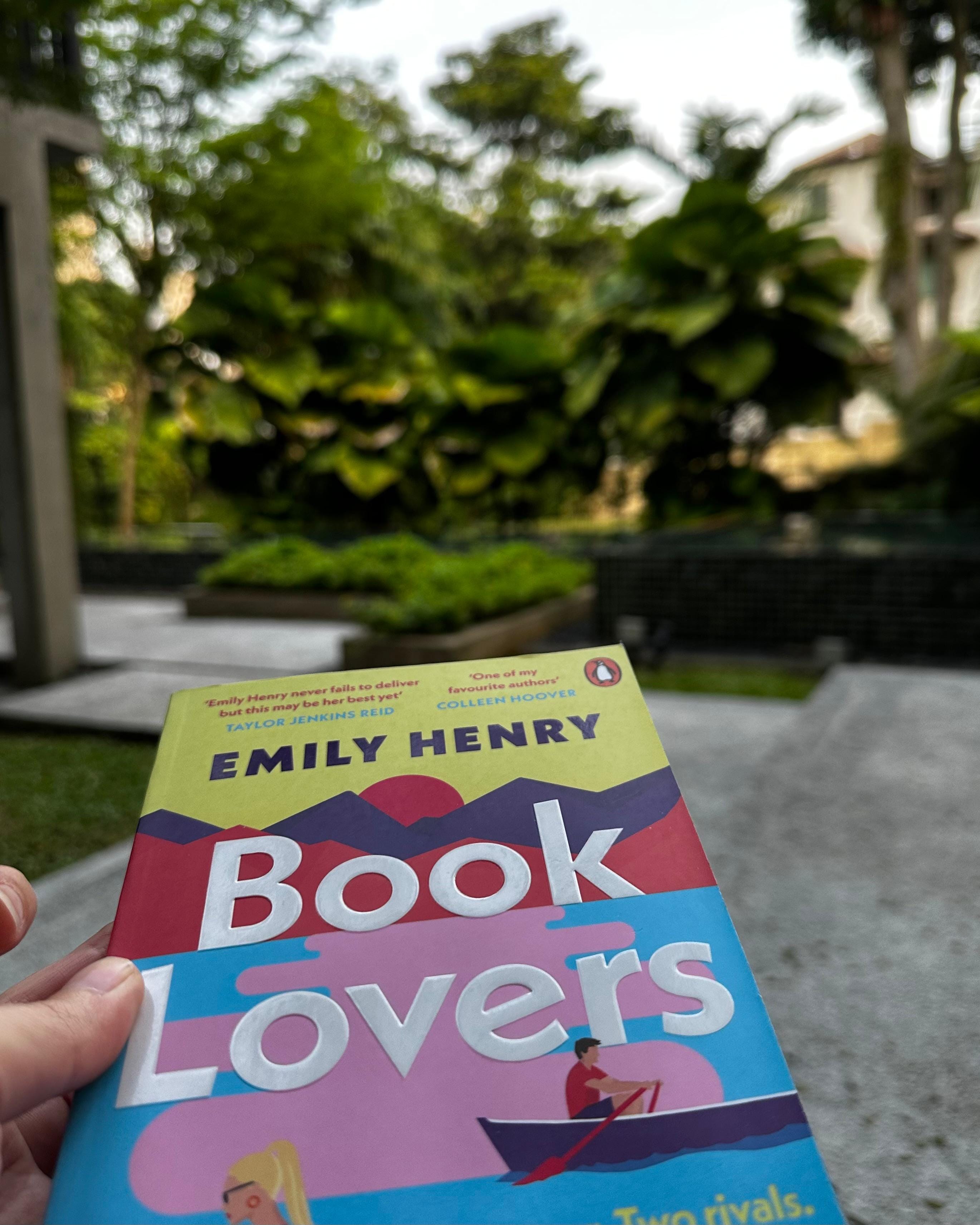
Anyway, back to the content business now: search-optimized but conversion-compromised content.
Content that drives traffic but not nearly enough conversions. Content that brings you passive readers, not active leads.
What do you think the problem is? Take a guess.
My experience working with 66+ SaaS companies tells me your content is likely not correctly addressing readers’ objections.
It may be spotlighting their pain points. Educating them on their jobs to be done (JTBD). It may also be honest (and unbiased) when talking about your product.
But:
If your content is NOT directly answering readers’ objections to using your SaaS tool, then it’s not answering the most vital question interested buyers have.
Let’s quickly look at an example here from Glassbox, a customer experience analytics software.
It’s far more expensive than competing tools like FullStory 😬
So instead of ostriching this obvious issue — pretending like the pricing difference doesn’t exist and is not a concern for buyers-to-be — the Glassbox team and I straightaway addressed the objection in their content.
Here’s how we addressed buyers’ objection in 5 steps:
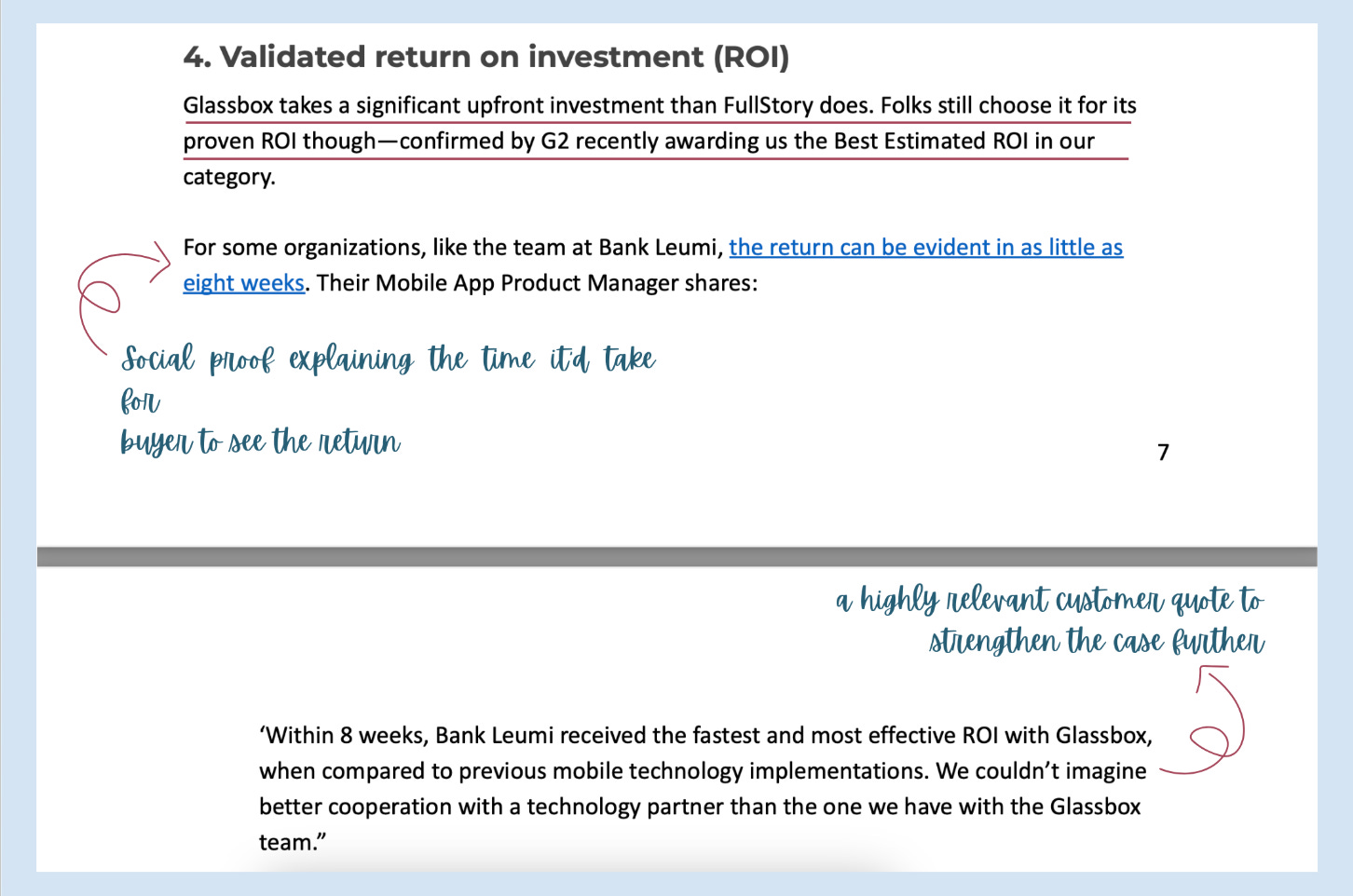
We acknowledged the objection upfront with “Glassbox takes a significant upfront investment than FullStory does.”
Then countered the objection immediately: “Folks still choose it for its proven ROI though.”
But we didn’t make any hollow claims — we used social proof to give a solid answer to the objection: “confirmed by G2 recently awarding us the Best Estimated ROI in our category.”
We also backed it with a customer story (more social proof), sharing how for Bank Leumi, the return came in “as little as 8 weeks” (and included a customer quote).
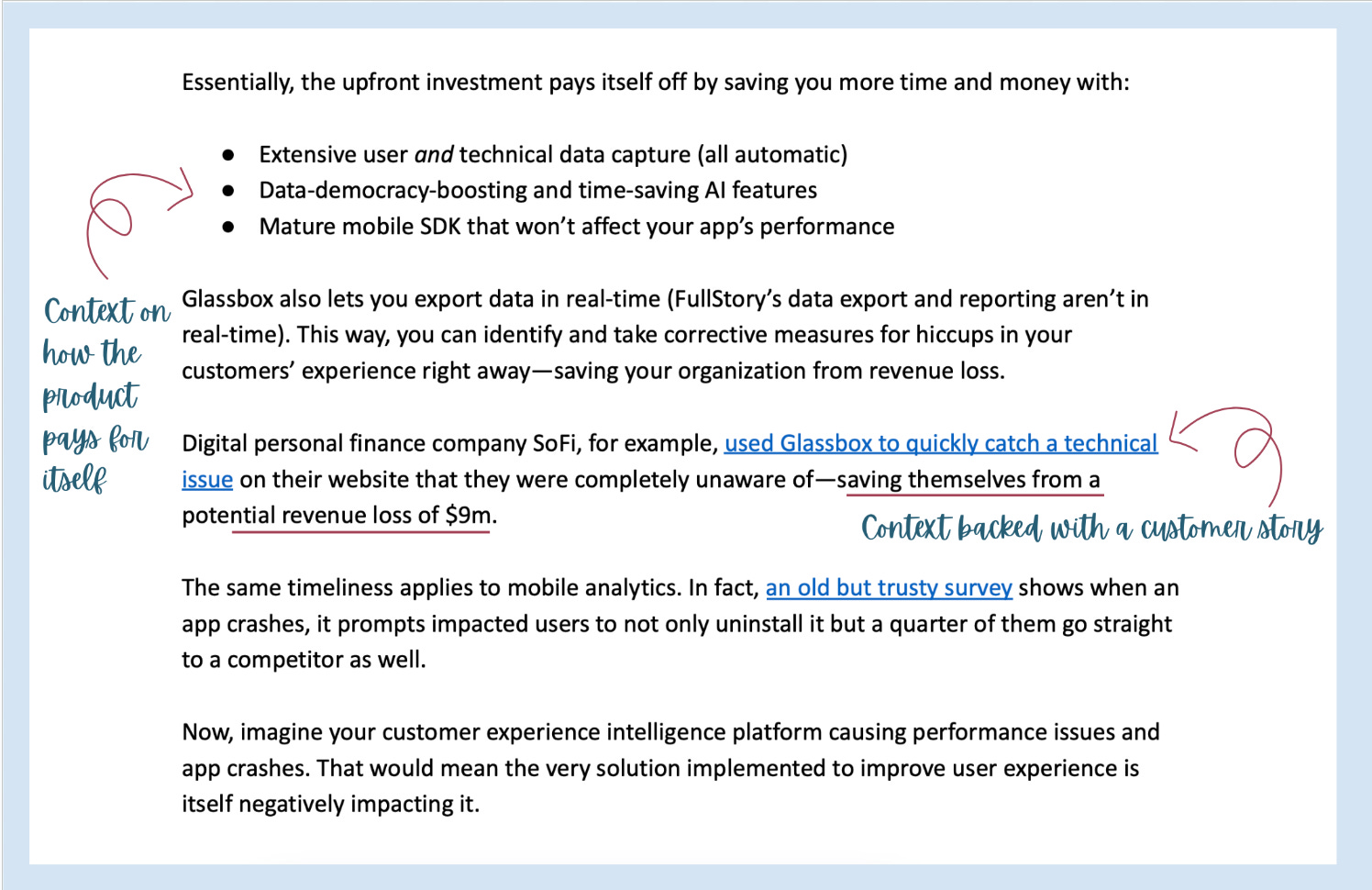
Finally, we added some more context about how the investment pays for itself using 3 short, readable bullet points and some more (case study) storytelling.
So today’s takeaways
1. Track buyers’ common objections. Ask yourself: why would someone want to solve a problem but still not take action?
2. Remember to handle 2 types of objections in your content:
✅ Objections readers have against using your tool versus how they are getting the job done without it. My issue on the onion peel framework has examples that’ll show you what this means.
✅ Objections readers have against your tool versus alternative/competing tools. As we saw in the example above.
Take home exercise
Answer the following from a reader’s perspective for creating a high-converting product-led content engine:
We would love to solve this problem, potentially even use your solution to do so, but [______].
I’ll leave you with 13 more questions to ask yourself when planning your product-led content 👊