The ostrich-approach to product-led content
How to address reader objections the right way

You’re reading The Content Workshop — a weekly 2-min read sharing tips for building a product-led content engine by me, Masooma 🤓
Did a colleague or peer forward this email to you? Subscribe for free here.
Not sure if this is true or a myth but when they sense danger, Ostriches bury their head in the sand.
If you’ve ever watched Prince of Persia: The Sands of Time, you’ll have seen this in action too 😄
Point is, ignoring the obvious won’t save you. It’ll only expose you to danger — raw and vulnerable.
Exaggeration aside, I see this happening extensively in SaaS content:
There’s an obvious competitor in the space — they’re killing it, but you have a tool of your own to (content) market so you pretend you’re the best.
For example, let’s say you’ve a new DIY design tool.
Now that space is pretty crowded, isn’t it? There are lots of DIY tools out there with Canva being the headmaster.
In your content, you need to be addressing this. You’ve gotta be specifying:
What makes your tool unique in the market, what its strengths are
What competing and leading tool’s strengths are and where they fall short
Who alternative tools are for, who they’re not for — same as who you are for and who you are not for
If you don’t do this, you end up with a major problem:
Your content ends up barely addressing readers’ objections. It’s why you aren’t seeing those conversions — heck, it’s also why you’re seeing only some conversions when you could be driving a lot more sign-ups.
Now let me show this in action with SavvyCal, a meeting scheduling tool in a space held tightly by Calendly.
Instead of ostrich-ing their way through their content, they acknowledge Calendly as the pioneer. Then, they smartly explain where and why they come in.
Their content even appreciates Calendly — see how that aligns with the ‘never badmouth your competitors’ PLC principle.
Their exact words: “Modern scheduling tools like SavvyCal wouldn’t be where they are today without Calendly.”
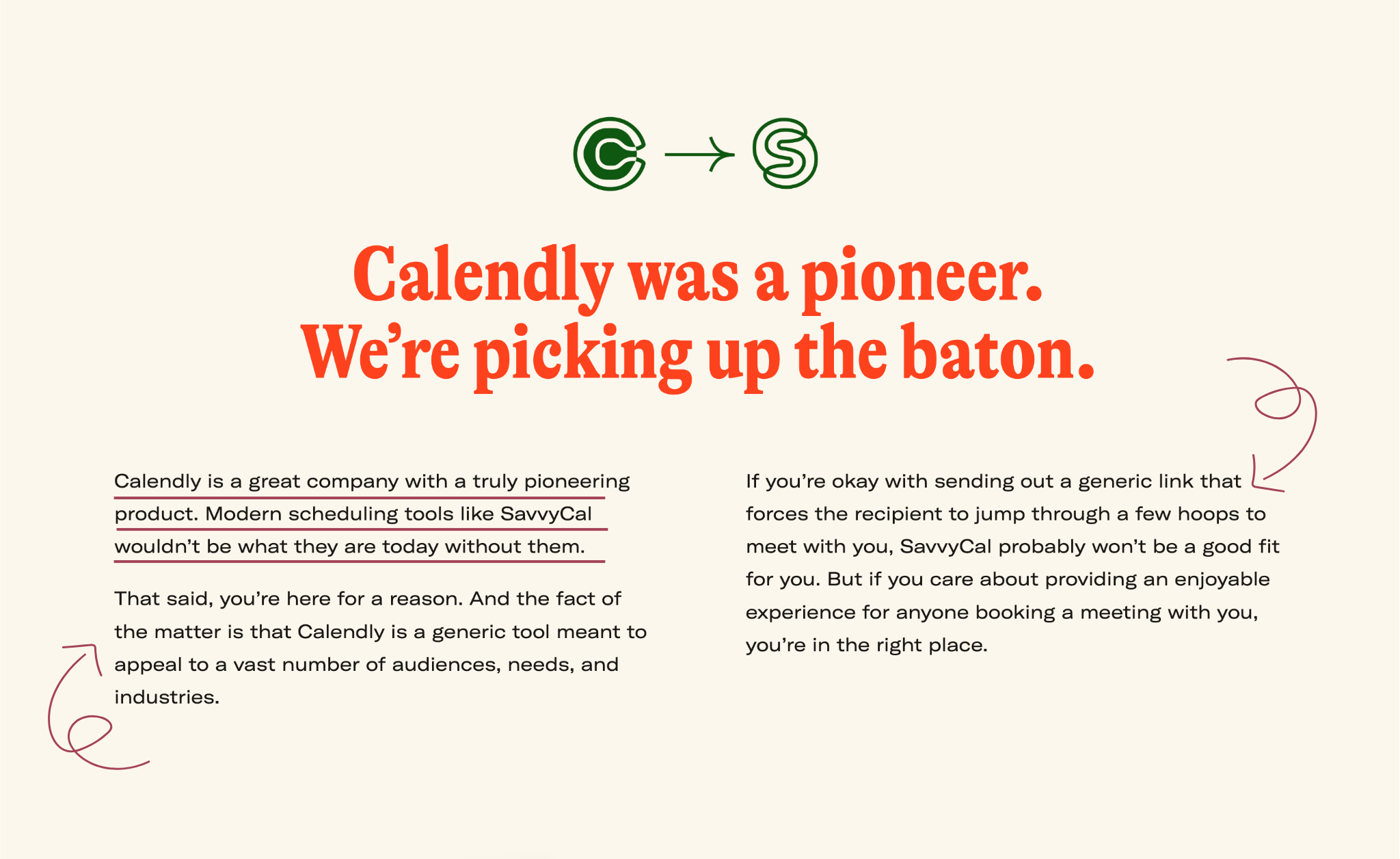
With the acknowledgment out of the way, SavvyCal goes straight into answering what the reader is thinking: ‘why you?’ (‘why SavvyCal?’)
They do this by pointing out Calendly’s obvious shortcomings.
But here’s the thing: you can’t highlight these shortcomings based on assumptions or allegations, you’ve to weave in information on what the market is saying.
In SavvyCal’s case, they’ve done this by highlighting the key issue: generic meeting link that makes the booking experience hard for the recipient.
Within this, they also immediately answer another important question readers have: “tell me honestly if you are for me.”
They do this by saying: “If you’re okay with sending out a generic link that forces the recipient to jump through a few hoops to meet with you, SavvyCall probably won’t be a good fit for you.”
Now this deserves a round of applause 👏
Nodding in agreement? Yeah, I thought so.
To put it in action:
Address your competitors based on your market research: what users are saying about competing tools’ shortcomings (not what you think is their weakness).
Talk to your product team. Learn about your product’s SWOT analysis that led to your SaaS tool’s birth/need. Use the info you unearth to plan your PLC strategy.
Bonus tip:
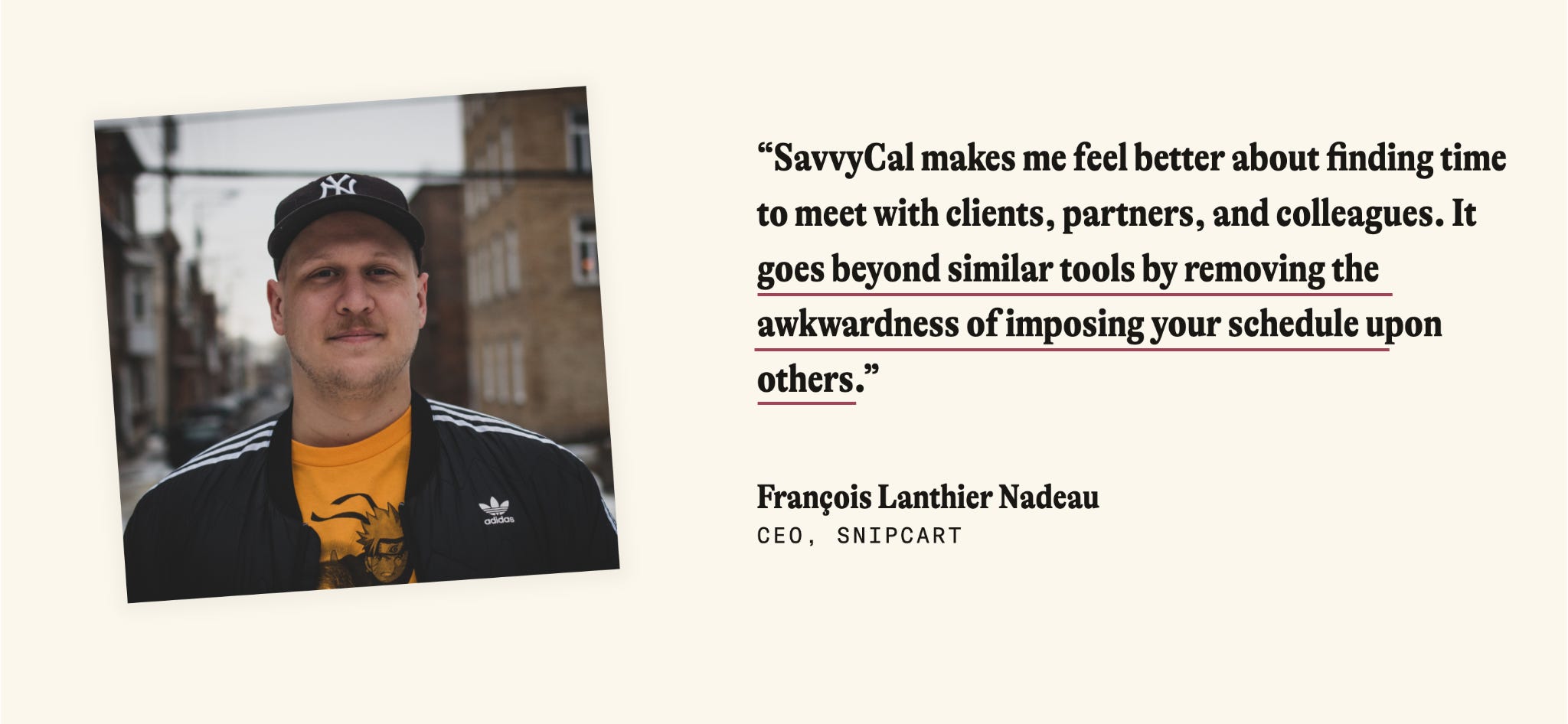
Back what you’re saying about the competitor with a cherrypicked, relevant customer testimonial making the same point 👇