
Letter #87: How to create sales enablement content
The sort that drive revenue and shows your impact

Know the feeling when the discovery call goes too well but the proposal turns out underwhelming? 🫤
It's a feeling I’m currently feeling in full as I talk to an agency to hire them for business ops.
The important point though is: the call was pretty good. So why did the proposal cover only surface-level info? 🤔
I think I know the answer: the marketing team (probably) didn’t help the sales team enough.
That is: there was no sales enablement content that could’ve helped this person close my deal (and I’m talkin’ a good amount of dolla ching ching, fellas).
There’s also an important lesson in there: you need to be creating deals-closing-good-level sales enablement content.
How so?
I asked Matthew Carnevale the same. Matthew is currently the Marketing Manager at Equiem — someone who has helped both small teams and 200-person companies make sales-driving content.
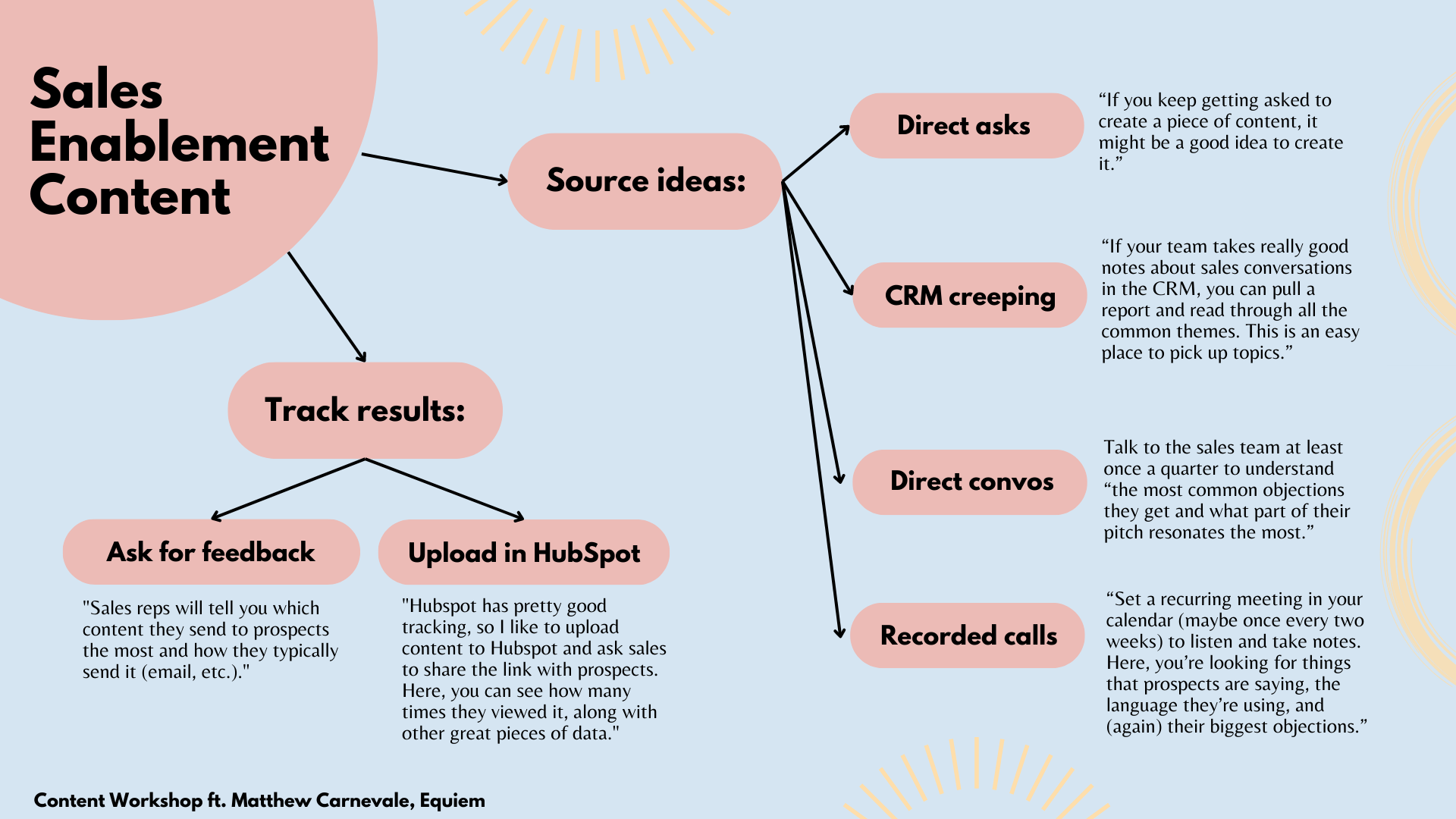
He uses 4 main channels to source ideas + ways to source feedback for sales enablement content:
Now for the questions that I ask all the experts featured in this letter:
A mistake to avoid as you make sales enablement content
An actionable tip to get you closer to helping your sales team win more deals
And a secret tip to show your content’s impact on revenue
👉 Don’t make this mistake: “Not creating it with a direct collaboration from sales.”
Lezz dig in.
“Sometimes marketing will come up with ideas in a silo and create content they believe should be sent to every prospect or included in every email,” Matthew admits.
“While they may not be wrong, sales reps are protective about what they send because it directly reflects on them. They won't send it if it’s not something they asked for or see a need for.”
“The way to get around this is to have at least one champion on the team use the content you created and vouch for its effectiveness. Once one sales rep succeeds with anything, the others jump on it immediately.”
👉 Do this today: Survey the sales team for assets they need.
“In my current company, someone on my team creates and sends out a survey to the sales team that covers a wide range of feedback for the marketing team.
Within that survey are questions regarding which marketing assets they would need to close more deals. There are many significant asks within the answers, and you’ll often see themes.
This is an easy one you can action this week. Remember, the best sales enablement content are those that actually get used by sales.”
Bonus tip:
“If you want sales reps to fill out your survey, get buy-in from the sales leader and get them to send it. Sales reps often respond better to their line manager as opposed to marketing.”
👉 The secret tip to creating revenue-driving sales enablement content: Make bottom-funnel sales assets first.
“The sales enablement content secrets at a 5-person company differ from a 200-person company (and I’ve done both).”
Even so, Matthew recommends:
“Spend 80% of your time creating sales enablement content for prospects at the bottom of the funnel (aka, most ready to buy). I say this because it’s the easiest to get quick wins directly attributed to your work and will make the sales team the happiest. Also, it can 1000% move people from almost ready to ready.”
“The key here is that we’re targeting people in the pipeline who are most likely to close. If you create TOFU content, proving it moves $$$ down the pipe early on is tougher.”
“For example, I once created 5+ video testimonials. This was great content for the website, but I ensured our sales team could also use them to help alleviate fear and get deals over the line.
It helped influence $1000’s of pipeline in a very short period, and I had reps directly tell me how much it helped them.”
In short:
Never make sales enablement content in a silo
Survey the sales team for assets they need
Start with creating content targeting people close to buying
That’s all for today,
Masooma